From Montréal to Belo Horizonte: How DUCTExplorer Transformed a Hackathon Win Into Real-World Climate Impact
The first-ever AI x City Climate Action Hackathon last September, hosted as part of the 2024 Innovate4Cities Conference (I4C24) in Montréal, Canada, kicked off a global call-to-action:
Can AI help assess the risks and vulnerabilities of Brazilian cities to heat, droughts, sea level rise, floods, and other climate hazards?
Out of this challenge emerged the DUCT*Explorer (*Digital Urban Climate Twin) – a team from the Singapore-ETH Centre – that came up with a groundbreaking approach to climate risk assessment.
“Participating in the 2024 Innovate4Cities Hackathon with Cooling Singapore was an exhilarating experience! Taking home the win opened incredible doors for us—we got to put our solution to the test in a whole new environment, powered by the amazing support from the Global Covenant of Mayors. The partnership they helped spark with the Belo Horizonte municipality was truly inspiring. Their team not only provided a wealth of data for our analysis, but also engaged enthusiastically at every step—constantly challenging and strengthening our ideas.
And really, this year there’s even a money prize? I can only envy the upcoming participants! Kudos to the Global Covenant of Mayors for putting the event together and bringing in such exciting sponsorships and partners. What a fantastic journey it’s been!”
– DUCTExplorer Team
Want to know more? Read all about the team’s incredible journey so far and see what’s in store for them next!
Participating in the Hackathon
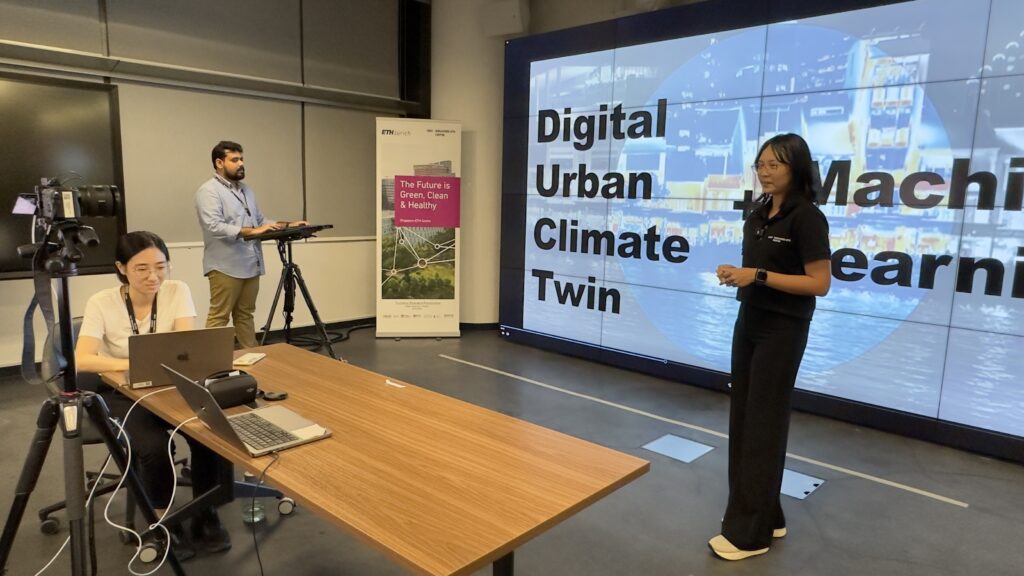
From the onset, the team had a clear idea of which aspect of the challenge they wanted to focus on. Joining virtually from Singapore, the team presented their aim, process, and methodology clearly during the finale. Their innovative use of AI stood out, with the solution not only meeting the critical data access challenges but also providing actionable insights that could accelerate climate adaptation efforts in urban areas.
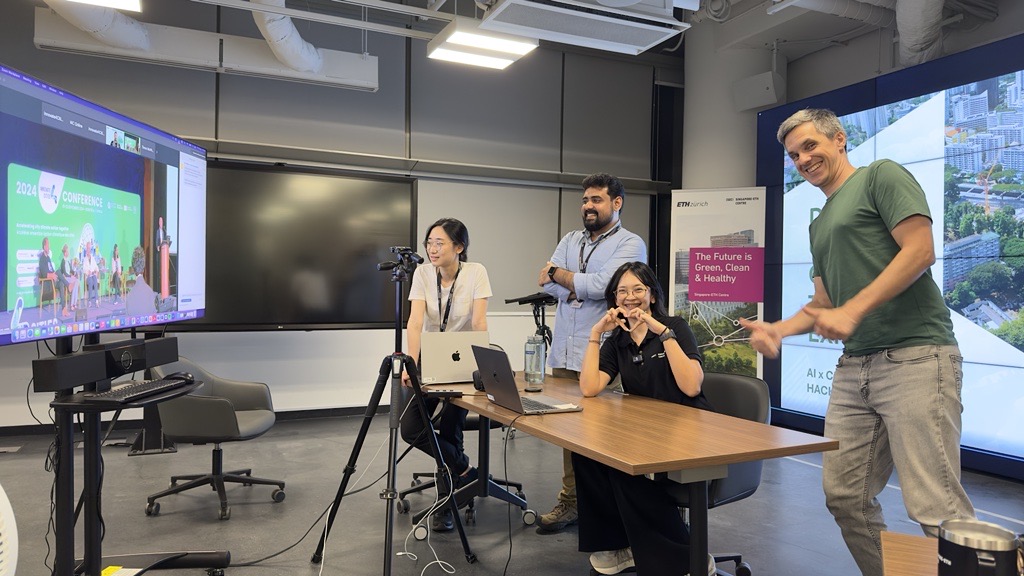
Despite the fierce competition, the team came out on top!
The Post-Hackathon Journey
Success did not stop at the prize line. Following their well-deserved win, the team got to work to develop their solution under the mentorship of Donna Vakalis, two-time Canadian Olympian and AI expert at Mila – Quebec Artificial Intelligence Institute.
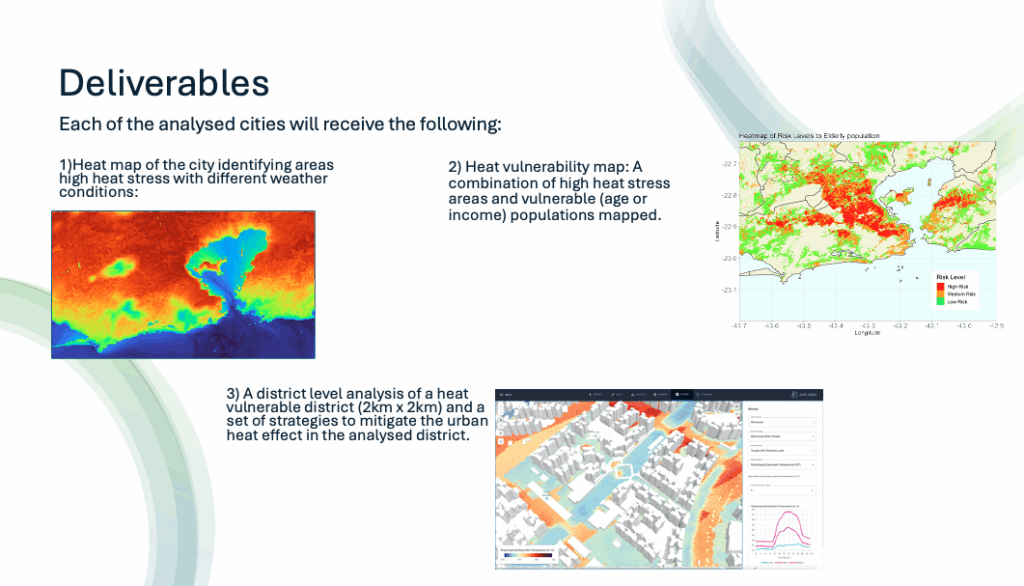
With support from the Urban Transitions Mission Centre (UTMC), the team was able to apply their DUCT methodology to real-world scenarios in Brazil, working closely with the authorities of Belo Horizonte, Brazil.
The Belo Horizonte collaboration November 2024 to May 2025:
- The proposal:
- The results:
- City-Scale heat maps including climate change impacts:
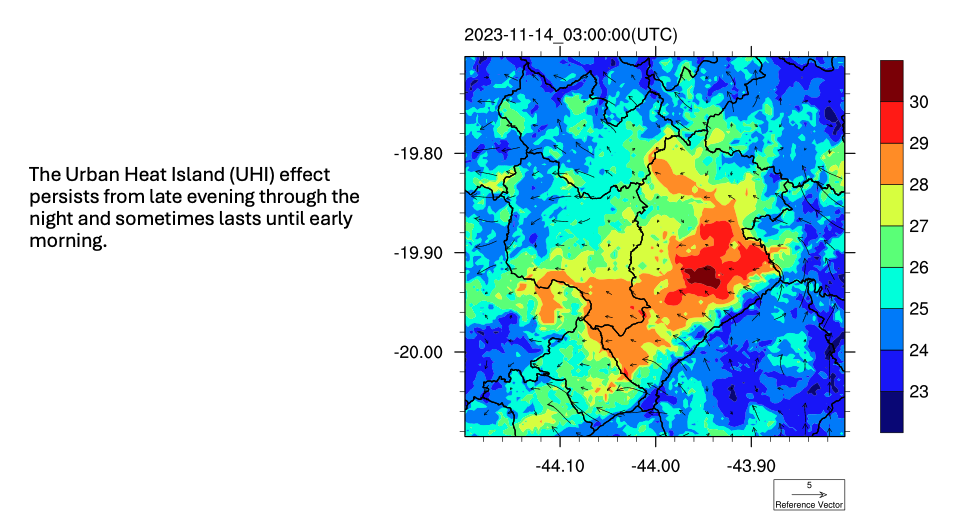

- District Scale heat mitigation solutions and analysis:
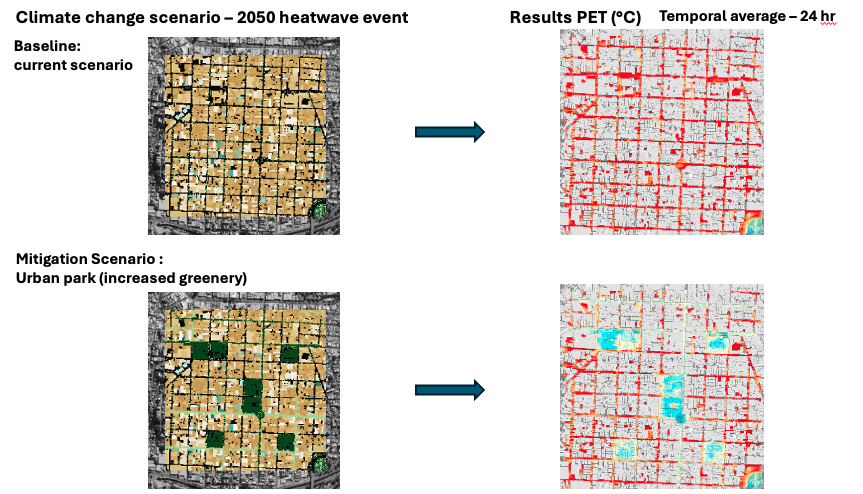
- City-Scale heat maps including climate change impacts:
Final presentation, 25 May 2025: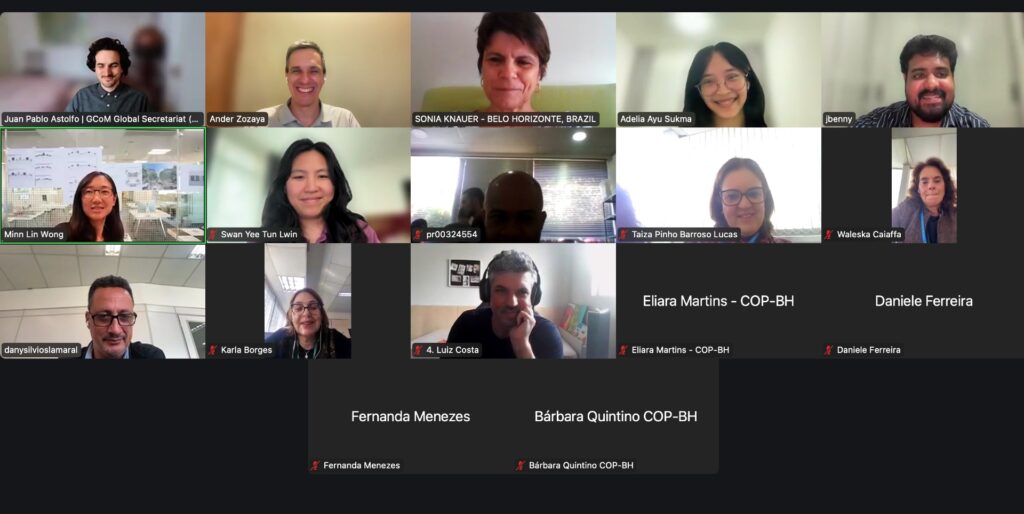
That’s not all – the team also got the opportunity to present their amazing work in other speaking opportunities, including the World Local Government Climate Summit held in Gyeonggi-do, Republic of Korea, hosted by ICLEI.
Speaking at two sessions “Science-based solutions: Climate satellites and information platforms” as part of the Climate Summit’s main programme, and “Cities of the Future: Energy & Digital Pathways to Climate Neutrality”, organized by the Urban Transitions Mission Centre (UTMC).Ander Zozaya, Project Manager at the Singapore-ETH Centre, showcased how DUCT helps urban planners grasp the nuances of heat and test mitigation strategies at both city-wide and district levels.
What’s next?
This is far from the end of DUCTExplorer’s story. The team shared that they are further expanding their impact by actively pursuing a potential collaboration with the University of Minhas Gerais to jointly apply for the Wellcome Trust grants, taking their innovative solution to the next level. They are also exploring the possibility of presenting the analysis at the upcoming COP30, taking place this year in Belém, Brazil.